
Watching the Olympics Through a New Lens
Drones racing at 75 mph. A cameraman in a white tuxedo. And a case for technology that connects. Welcome to the Immersive Games.
Technology is supposed to be seamless but can often create distance. More interfaces, more friction between you and the thing you’re trying to experience.
Not this week.
The Milan Cortina Olympics have done something rare: every major technology choice has brought us closer. Closer to the athletes, the mind-boggling speed and danger, the difficulty, the emotional and physical pressure. Creating more of a human connection. And once you see it, you can’t unsee it.
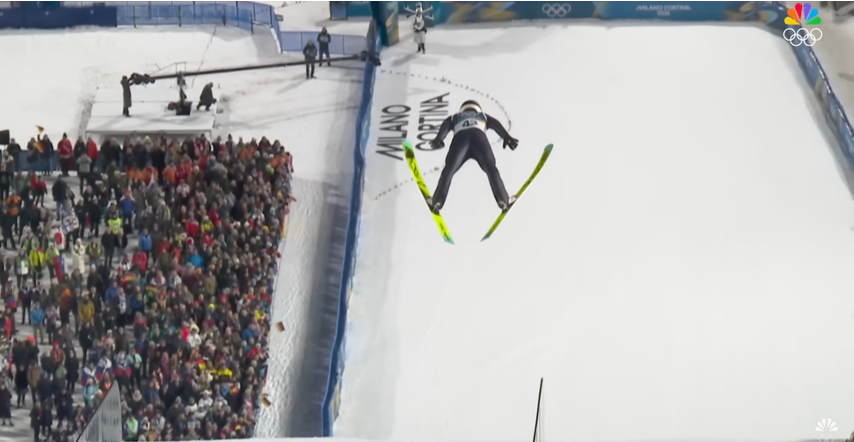
Watch the giant slalom. A custom built, half-pound drone races down the mountain with the skiers at 75 miles per hour. Not catching skiers as blurs as they pass one fixed camera after another. With them. For the first time, you understand what’s actually happening on that mountain. The speed. The non-existent margin of error. You’re there.

NBC Sports.
Those static camera shots from previous Games? They feel quaint now.
Olympic Broadcasting Services deployed 25 drones across these Games — 15 of them first-person-view units operated by three-person teams, the pilot flying with goggles on, a director framing the shot, a technician managing the signal. Some of the pilots are former athletes themselves. A former Norwegian ski jumper is flying the drone at the jumping venue. He knows the sport from the inside. He knows what the viewer needs to feel.
NBC Sports.
The technology is remarkable. But the reason it works is that the people behind it understand the experience they’re trying to convey.
Then there’s Jordan Cowan.
Former U.S. competitive ice dancer, 35, now the first camera operator in Olympic history allowed on the figure skating ice. He skates backward after every routine — carrying a custom-built rig he designed himself, mounted on a stabilized gimbal that keeps the horizon level no matter how fast he moves — to capture the critical seconds after the performance ends and the emotions hit.
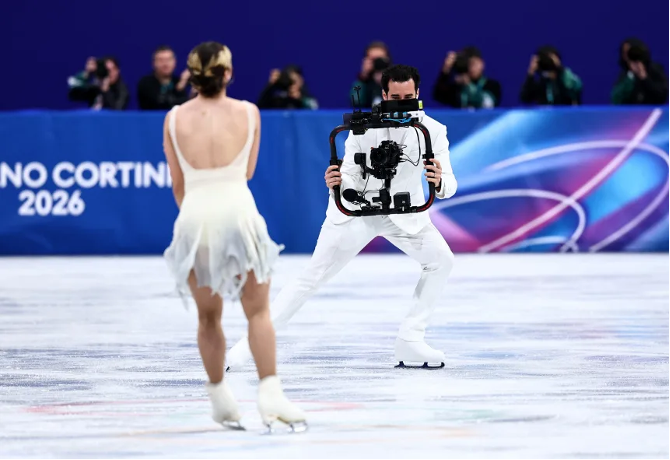
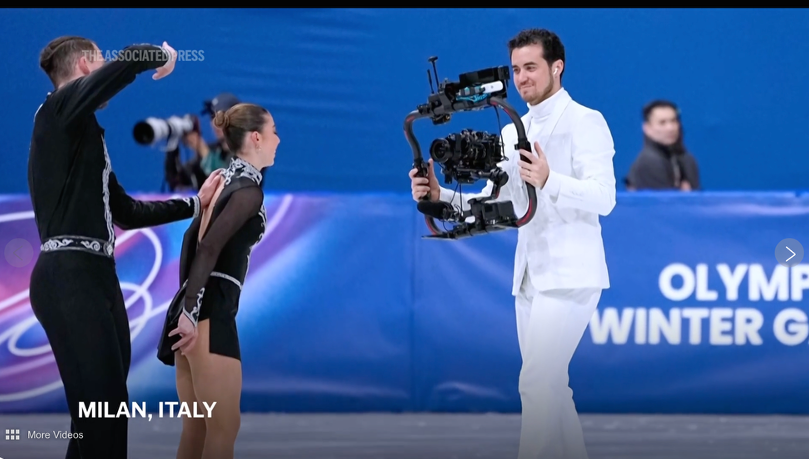
“The ice is a sacred place for a skater,” Cowan has said. “To be the first person out there at the end of their performance is a privilege.”
What makes Cowan extraordinary is he understands the technology, the sport, and the emotional pressure the athletes are under because he’s been there. When Ilia Malinin nailed his long program in the team event and helped clinch gold for the U.S., the 21-year-old actually punched Cowan’s camera in pure elation. Days later, when Malinin fell apart in the singles free skate, Cowan kept his distance. He let the camera capture the story without crowding the moment.
The story was always there. Now we can finally see it.
And credit where it’s due: NBC got Peacock right.
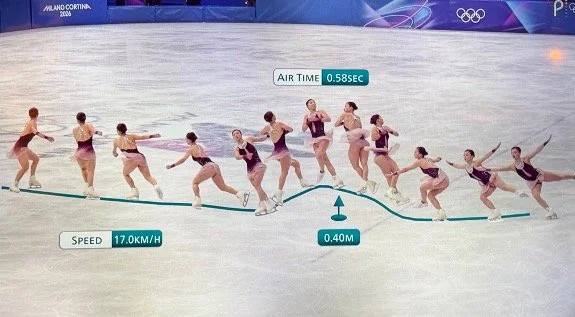
High tech analysis puts competition in new light.
Watch whatever sport you want when you want. The full event, not the primetime highlight reel. Jump to a specific athlete if you want. Go deep on skimo or curling. But the real unlock is the World Feed: no commentary, no production narrative, all the athletes. Not only the curated, American-focused selection that broadcast has always imposed for U.S. audiences. Peacock’s offering and UI has only improved since the last Olympic Games.
Giving the viewer more control didn’t diminish the experience. It deepened it.
This is what technology is supposed to do. Disappear into the experience. Make you more present, not less. Enable you to connect on a human level. Put you closer to something real, not further from it behind another screen.
It doesn’t always work this way. Most of the time, it doesn’t.
But in Milan, it has. And the reason is the same in each case — from the drone pilot who used to be a ski jumper, to the cameraman who used to be an ice dancer, to the app that trusts its audience to choose. The technology works because someone with deep knowledge of the experience made sure it served the viewer, not the other way around.
That’s a lesson that extends well beyond the Olympics.